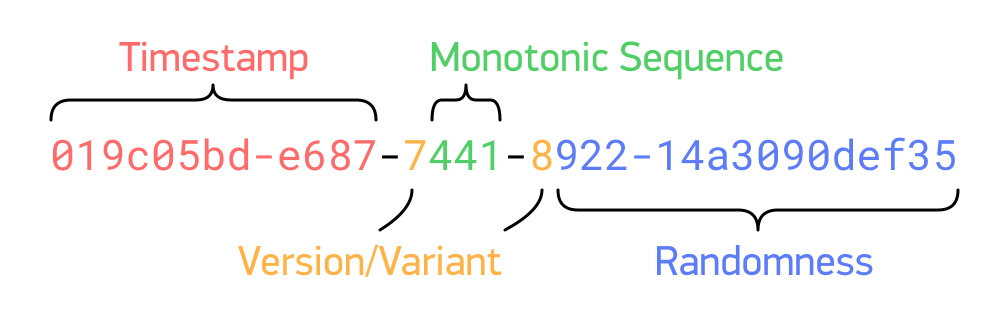
UUIDv7 (wiki link) is seeing strong and eager adoption as a solution to problems that have long plagued the tech industry, providing a solution for generating collision-free IDs on the backend that could still be sorted chronologically to play nicer with database indexes and other needs.1 As a quick briefer, a UUIDv7 is essentially composed of two parts: a timestamp half and a randomized bytes half, and they’re sorted by the timestamp:
Sharding UUIDv7 (and UUID v3, v4, and v5) values with one function
Reply