
 Since we live in an imperfect world where we often have to trade ease-of-use for simplicity and abstractions for performance, while dealing with computer systems and standards you’ll often run into tasks that seem like they should be really obvious and simple only to later discover that in reality they lead down a rabbit hole. Such is the case anytime a developer comes into contact with the individual bits of a binary blob – and that can happen even when you least expect it.
The premise is simple: given a database powered by, for example, the extremely popular MySQL or SQLite RDBMS engines that do not offer “native” representation of UUIDs or GUIDs, database designers and systems programmers have a choice to make: do you store a GUID as a plaintext (VARCHAR or TEXT) and take the performance, memory, and storage hit that comes with it, or do you take off the gloves and dig out the BLOB column type in your DDL?
 The
The 
 We may not know for sure what it’s going to look like or what it will cost, but we do know that the new iPhone 8 – Apple’s 10 year iPhone anniversary edition – is on its way and it’ll be running iOS 11. And unlike the iPhone 8, iOS 11 has been available now for some time for beta testing and software development. There are a lot of changes – some good, some bad
 HTTPS is the future and the future is (finally) here. Secure HTTP requests that provide end-to-end encryption between the client making the request and the server providing it with the requested content is finally making some headway, with almost a third of the top one million sites on the internet serving content over SSL, as of August 2017: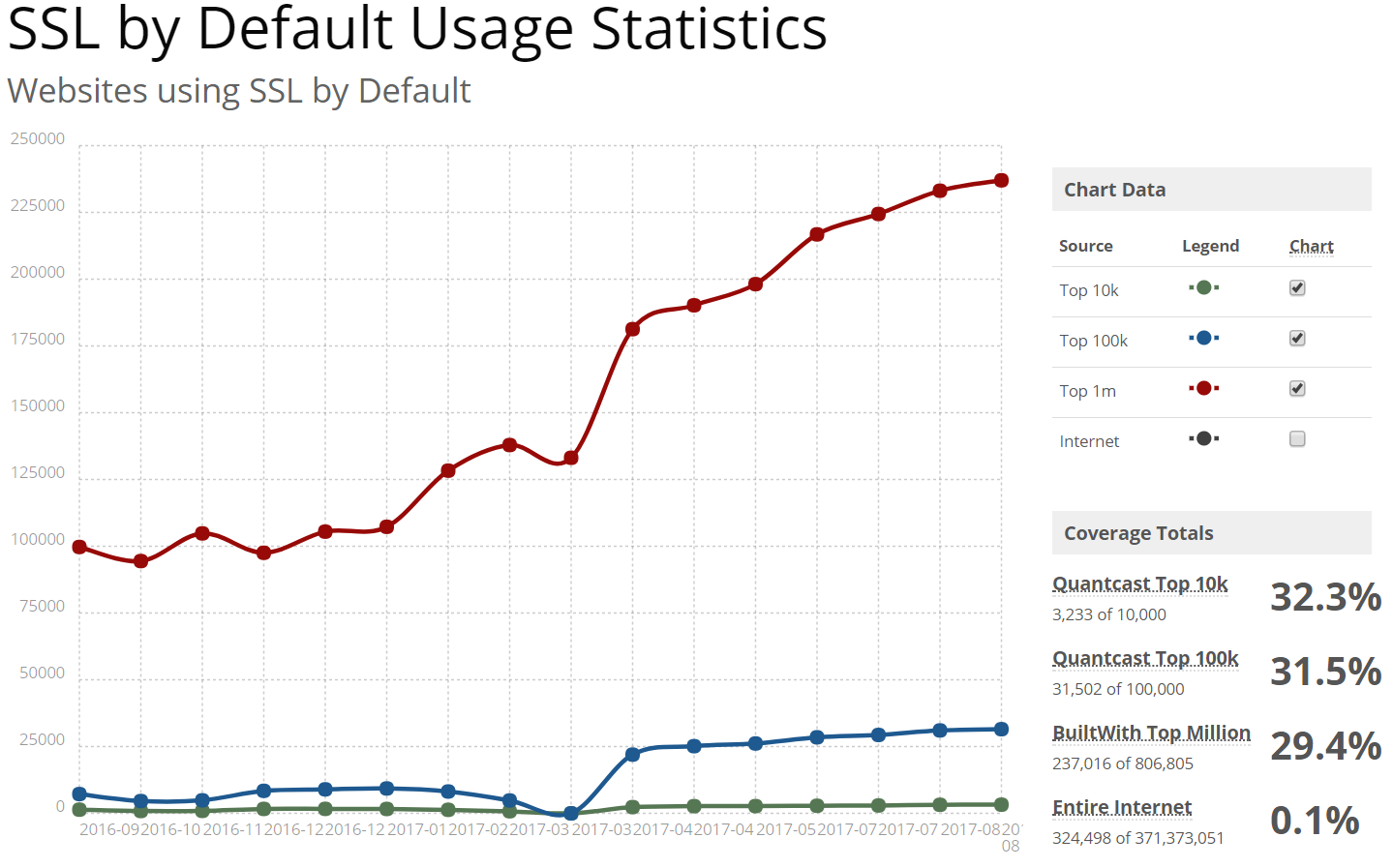
 If you haven’t heard of
  If you’re still stuck on .NET 2.0, 3.0, or 3.5 for any reason and don’t have access to the
 If you have any skin invested in the high-performance computing game, you’ve almost certainly heard of the likes of MMX and SSE, the original “extensions” to the x86 assembly instruction set that provided task-specific performance-optimized instructions that let developers take advantage of specific hardware extensions to quickly perform tasks that previously required extra steps in software to compute. If you haven’t, here’s a quick briefer.